English
 Italian
 German
 French
Stage Fourteen
From Celle Macra to Dronero
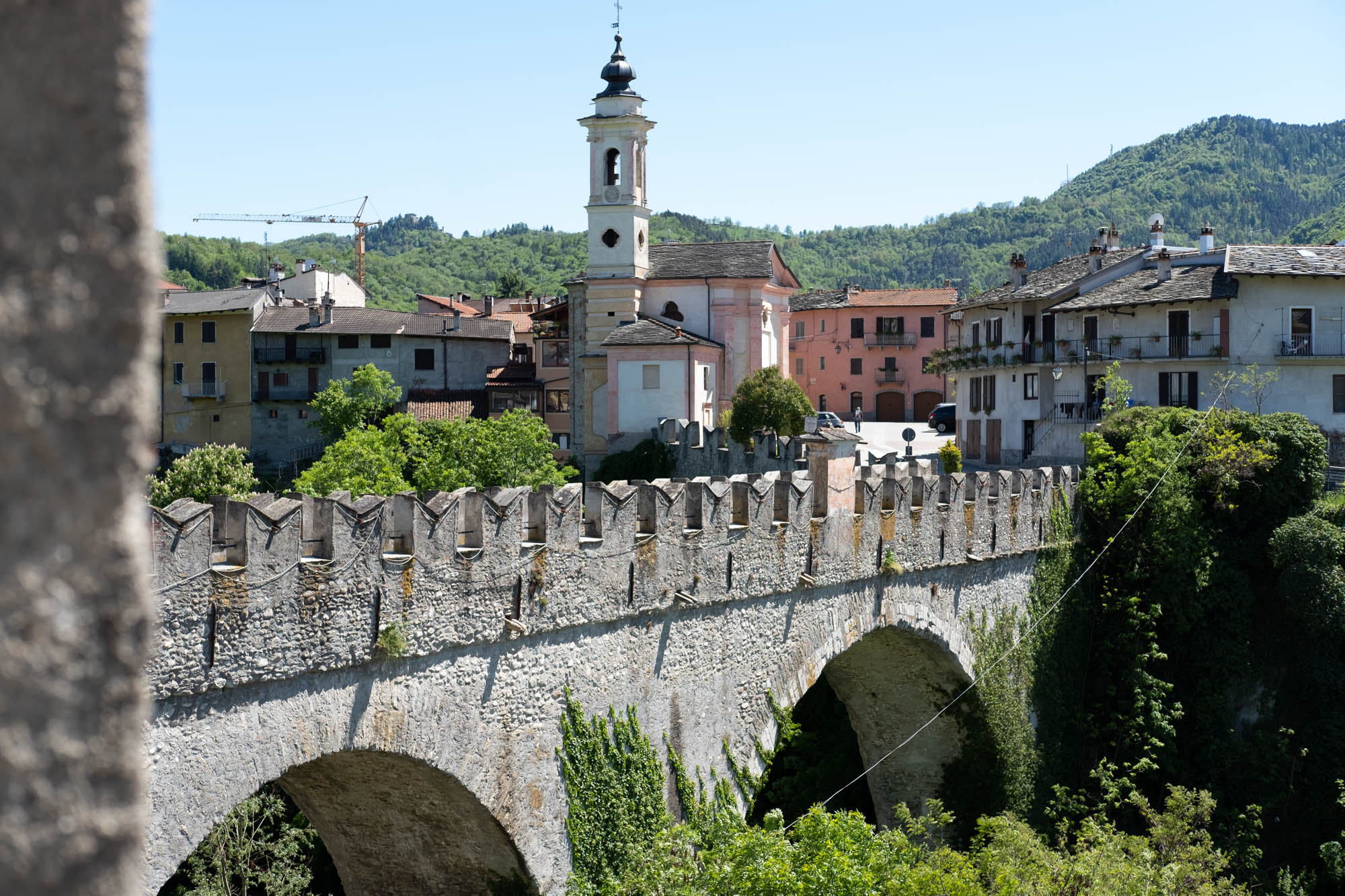
The final stage of the Percorsi Occitani, which leads from Celle Macra back to Dronero and its famous Devil's Bridge, the symbol of the city. A slow return toward the plains through secluded side valleys and the long plateau connecting Cartignano with Dronero.
Take the small road—first paved and then cobbled—that climbs between the Maraman inn and the back of the San Giovanni Battista parish church, rebuilt in the 18th century on the remains of a medieval original. Pass the Seles Museum, the former Church of San Rocco dedicated to the valley’s itinerant trades and specifically the anchovy sellers, after which the lane becomes a grassy path.
When you reach a chapel at a crossroads, follow the mule track climbing toward Castellaro along a panoramic stretch overlooking the small road winding toward the Chapel of San Sebastiano.
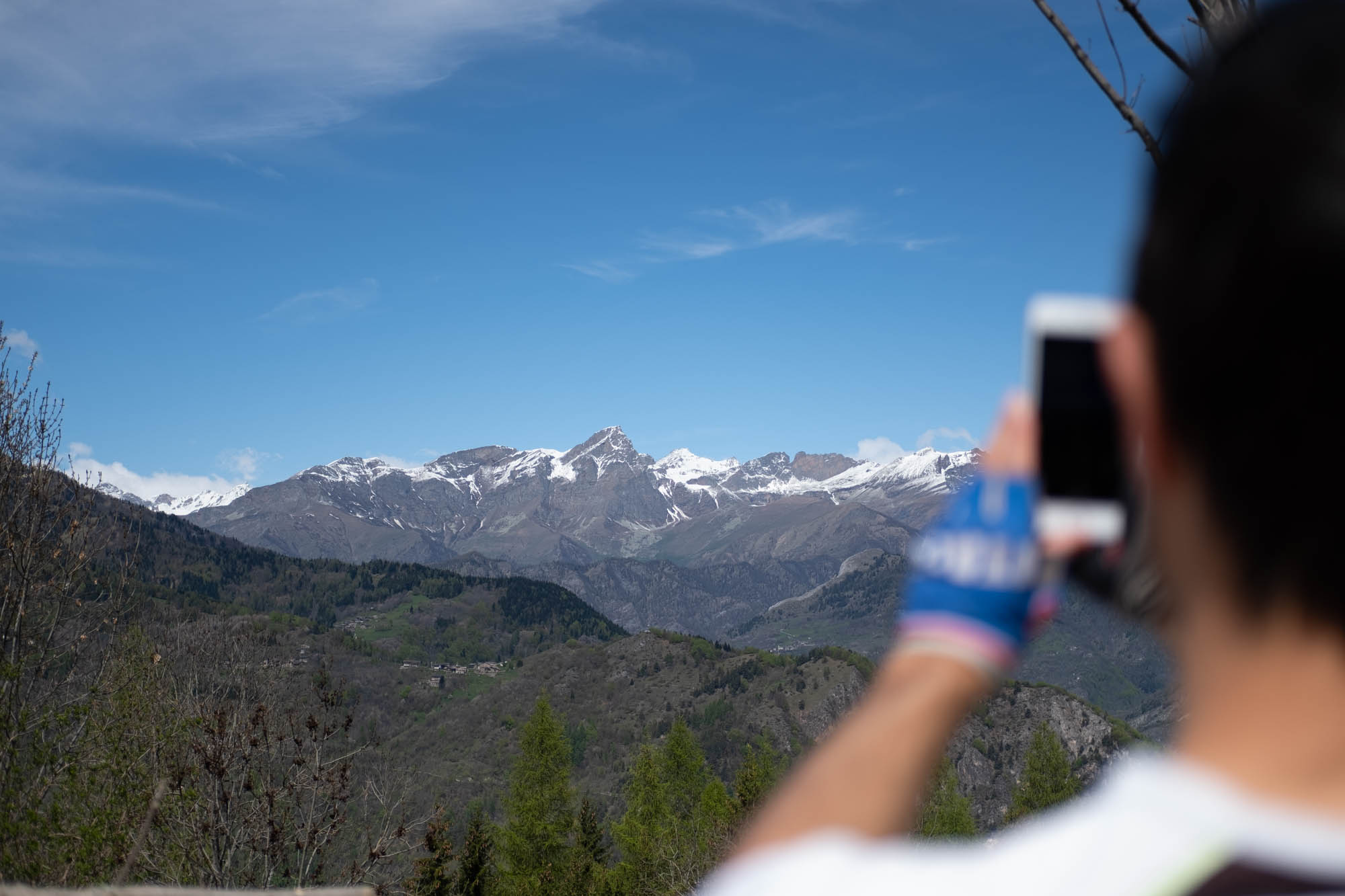
A beautiful stretch through the pine forest leads to Castellaro, a medieval hamlet with significant architectural features, set in a stunning, sunny location with panoramic views of the 3,000-meter peaks of Chersogno, Rocca la Marchisa, and Pelvo d’Elva.
Pass the church, surrounded by charming wooden sculptures, and climb among the houses above. After about fifty meters, near a fountain, turn left. The grassy dirt road climbs gently at first and then gradually steeper toward the clearing of Piano della Colla, eventually becoming a small path that leads to the summit, the highest point of the stage.
Cross the dirt road to take the small grassy path descending on the opposite side. Further on, ignore a forest track that crosses your path. Two hundred meters later, keep left and descend among the houses of Soglio Soprano.
Once on the access road to the hamlet, follow it to the right. After passing Soglio Belloni, the lane continues for a couple of kilometers slightly downhill and, entering the municipality of San Damiano Macra, joins another dirt road that descends to the left toward Soglio Sottano. Instead, turn right on a slight incline and, ignoring all turn-offs, arrive at Serre after another kilometer and a half. Leave the dirt road to take a small, steep path that zig-zags down to Filoira, right in front of the Church of Madonna della Neve.
Follow the paved road as it gently descends toward the valley. Leave it after three hundred meters at a hairpin bend. Turn right onto a dirt road that leads after a hundred meters to Bedale. After passing the houses, it becomes a beautiful hillside path, passing a picturesque small waterfall and descending to cross the Rio Albert on an ancient stone bridge, near which the ruins of a mill can still be found.
The path begins to climb the hillside again, never becoming too steep, through an enchanting, dense forest of ash and then beech trees. Ignore a small path branching off to the left and, further up, join the dirt road coming from Santa Margherita.
Follow it downhill, arriving after a few meters at Colle della Margherita where, next to a small chapel, numerous partisan steles have been erected. In the terrible winter of 1944, partisan groups from the second Giustizia e Libertà division began a long march from this very spot that led them to the Langhe region.
Continue on the dirt road which, after three hundred meters of nearly level ground, leads to Santa Margherita. Below the houses, the road becomes paved and follows a very long route toward the valley. One section that runs alongside sheer rock faces is particularly interesting.
After two and a half kilometers, at a votive pillar just past a hairpin bend, turn left onto the mule track that descends, taking a long shortcut over loose ground that leads much further down to Ruà del Prato.
Follow the paved road toward the valley for three hundred meters and turn left (at the pillar) onto a lane that starts climbing again. After gaining about sixty meters in elevation, descend to the Chapel of Santa Cristina, located in a panoramic position overlooking the hamlet of Copetto. Go around it from below and then turn onto the forest track on the left, which descends steeply toward Cartignano, joining a small paved road.
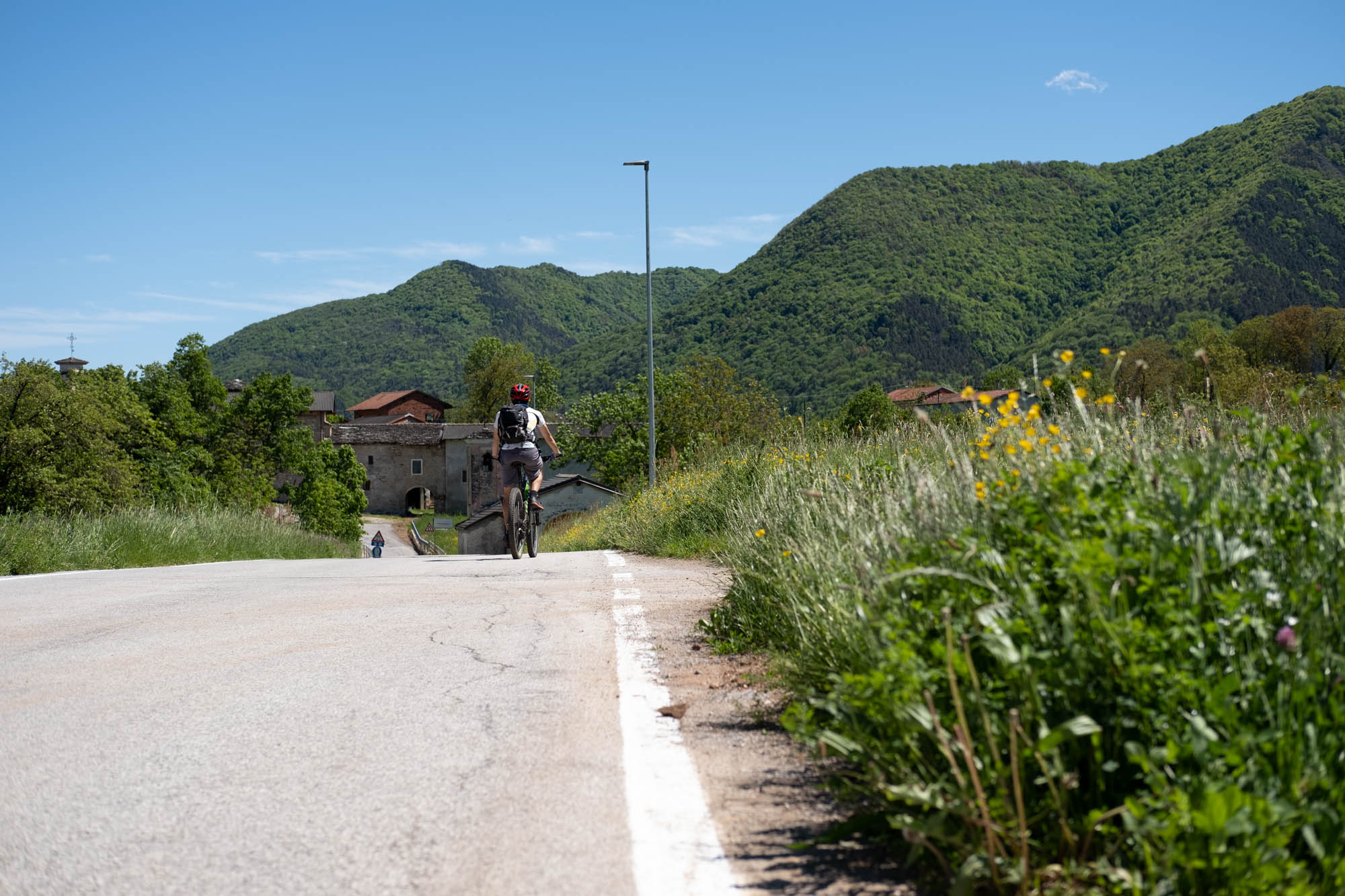
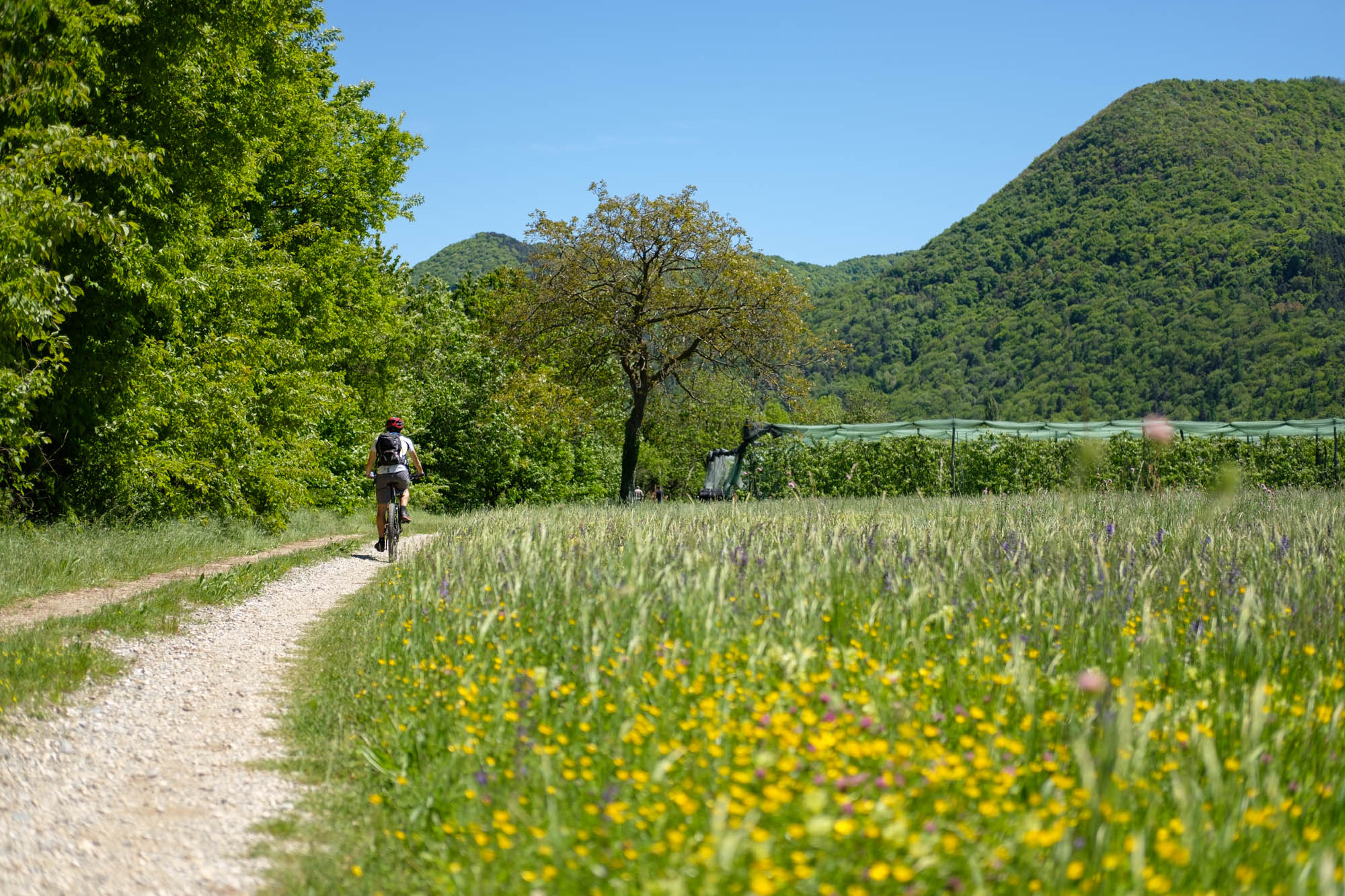
Reach the parish church, then turn right into Via Paschero. Pass the cemetery and enter the municipality of Dronero and the hamlet of Ponte Bedale. Immediately after the houses, turn left onto the lane—initially paved and then dirt—that moves through a very panoramic stretch among tidy crops. After four hundred meters, turn left and follow the road that runs along the edge of the plateau.
Upon reaching the hamlet of Tetti, the road becomes paved again. Immediately after, near a pillar, turn left and after one hundred and fifty meters cross the road and proceed on the one that goes between two houses. After a kilometer and a half, at a junction, take the cycle-pedestrian path to the right. Pass the hydroelectric plant with its penstock and, just beyond it, turn left downhill.
Follow the cycle-pedestrian stretch that stays along the Maira stream and, after a kilometer, joins Via Marchisa. Continue following it east for another kilometer alongside a canal. Every now and then, beautiful views of Dronero open up.
Turn left into Via Colombo. Passing between the houses, you will reach the small paved square of the Church of Santa Brigida, where the famous Devil’s Bridge begins. The symbol of the city, legend has it that it was built by the Devil himself. Climb toward the historic center and, without a fixed route, lose yourself in the town’s streets to conclude the long Percorsi Occitani trek.
Text and photos by Cuneotrekking.com
Information
- Ascent: 600 m
- Descent: 1,200 m
- Distance: 25.9 km
- Starting altitude: 1,261 m
- Max altitude: 1,562 m
- Difficulty: T (Tourist)
Notes
As this is a very long stage, you might consider finishing in Cartignano and returning to your car using the Sherpabus service. It is helpful to bring a GPS track with you, given the many junctions that are not always signposted.