 English
 Italian
 German
 French
First Stage
From Villar San Costanzo to Sant'Anna di Roccabruna
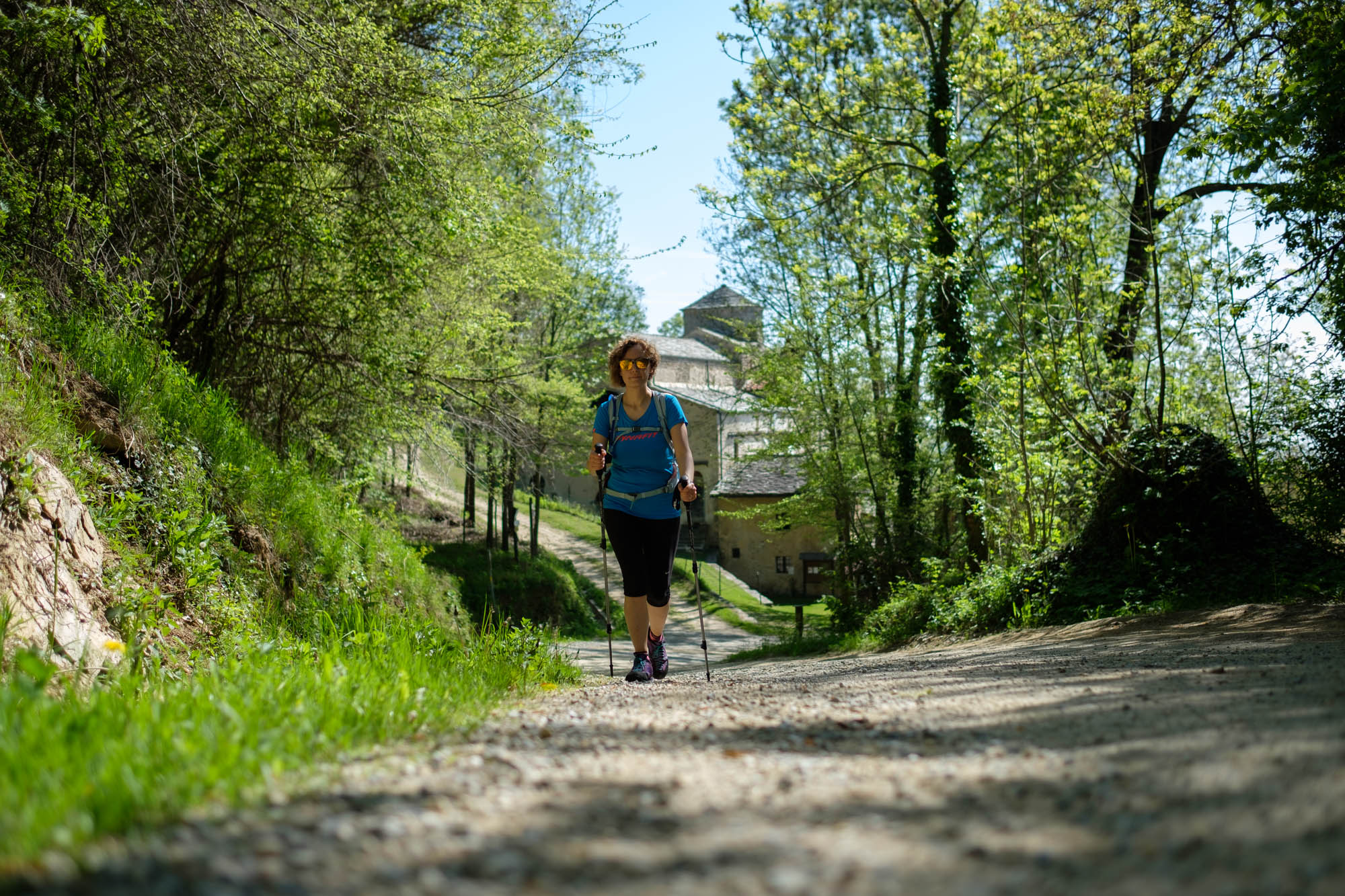
The first stage of the Occitan Routes takes place almost entirely along the hillside through the woods at the foot of Monte San Bernardo and Roccerè. A long stage through less frequented areas that, while not reaching any peaks, has the merit of gradually introducing us to the "slow" and contemplative philosophy of the Occitan Routes.
Leave your car in the large parking lot of the Ciciu del Villar nature reserve.
Head down the paved road toward Villar San Costanzo where you will encounter the first yellow signs of the Occitan Routes. After 250 meters, turn right onto the unpaved Via Fornace. Follow it all the way to the end and turn left, back onto pavement, onto Via Gioera. At the end, near a pillar, turn right onto Via Cervetto. Skirt the park of a beautiful villa with splendid views back toward the Ligurian Alps.
Staying on the paved road, which becomes increasingly steep, pass several clusters of houses. The road becomes a forest track. A short section coincides with the Luca Borgoni trail, named after an athlete who died prematurely on the Matterhorn. Ignoring all side paths, follow the unpaved road that runs along the hillside through the woods and, with gentle ups and downs, leads after a couple of kilometers to the splendid Abbey of San Costanzo al Monte, consisting of a church built above a crypt of exceptional size, of ancient origins and remodeled several times over the centuries.
Past the abbey, turn right onto the unpaved road coming from Dronero that winds gently upward. Go around the B&B Il Picco, pass Cascina Barbero and further on, through switchbacks, pass Orcino.
At a fork, turn right, staying at the edge of the Bollo clearing from which the summit of Monte San Bernardo (1,625 m) appears nearby, overlooking this first part of the route.
Just beyond, the road forks: keeping left you will soon reach La Baita, a wooden cottage located exactly at 1,000 m on a splendid panoramic balcony overlooking the plain and the Maritime and Ligurian Alps, dominated by the Besimauda massif.
The unpaved road continues through an enchanting birch forest and then runs along the edge of the Pian l’Abà clearing. Ignoring a left turn, the unpaved road becomes a path flanked by dry stone walls and reaches the ruins near the Fontana dell’Asino, now dry, the highest point of this first part of the route.
Turning left between what remains of the old huts, descend into the Rio della Casa ravine, characterized by an eroded section and then an area scattered with boulders. Having entered the municipality of Roccabruna, near the Case Arduini the path becomes an unpaved road again. After crossing a stream, at the next fork keep right until you reach Borgata Oggero. At the first houses, near an electric pole (note: not very visible), turn sharply left onto a mule track that descends and passes first a fresh fountain and then some ruins.
The path continues almost flat for a good stretch. At a fork, continue straight, cross two streams and shortly after leave to the left two less marked paths that descend toward Borgata Tiauda. The path becomes a beautiful balcony section and offers excellent views extending from Dronero to Besimauda.
Arriving at Borgata Castello, pass the church and turn right between the houses (fountain) and then follow the small paved access road to the village. After 200 meters, leave it to turn right onto the Chast’lass trail, an unpaved road that initially heads back toward Castello and from which beautiful views open up toward the plain.
The unpaved road climbs increasingly steeply through chestnuts, ash trees, mountain ash and cherry trees. Ignoring all side paths, after a couple of strenuous kilometers, reach Chast’lass, a rocky viewpoint where the castle of Roccabruna once stood.
A few meters later there is a three-way junction. Turning left, make a wide and somewhat monotonous semicircle on an unpaved road that, after four flat kilometers, leads to the hamlet of Sant’Anna di Roccabruna (1,252 m), where the first stage ends.
Text and photos by Cuneotrekking.com
Information
- Ascent: 950 m
- Descent: 320 m
- Distance: 17.0 km
- Starting altitude: 644 m
- Max altitude: 1,315 m
- Difficulty: E (Hiking)
Notes
The route runs through the lower valley, so it is recommended during the intermediate seasons when the heat is not yet oppressive. Although it does not reach high altitudes, the stage is long and, considering the various ups and downs, involves significant elevation changes.


On the trail
Here are the points of support of this stage
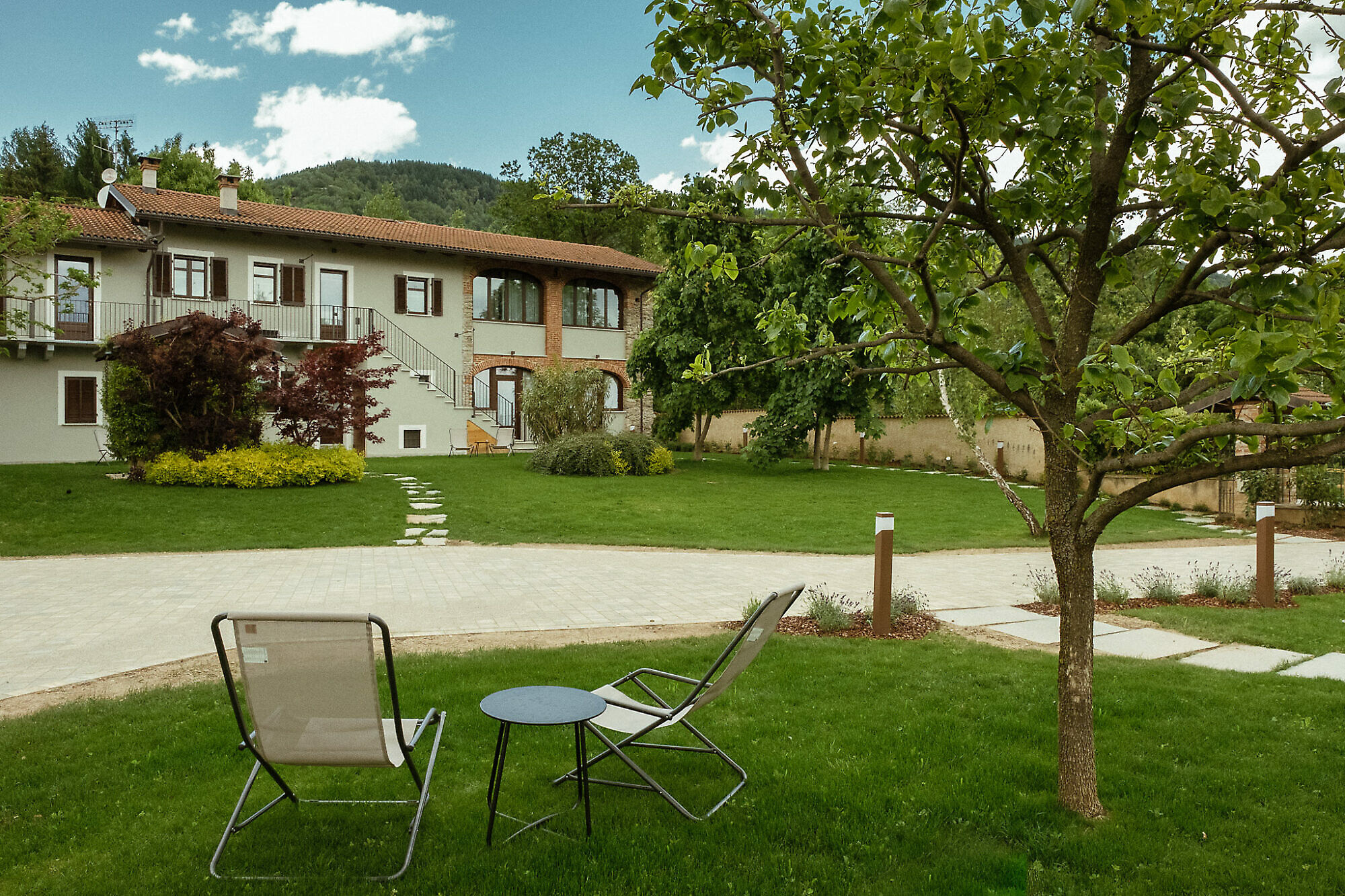
B&B Casa Bart
- Via Giovanni Cancan, 23 (Villar San Costanzo)
- +39 3347613452
- info@casabart.com
- https://www.casabart.com/
- CIR: 004247-AFF-00005
- Opening period: March, April, May, June, July, August, September, October, November
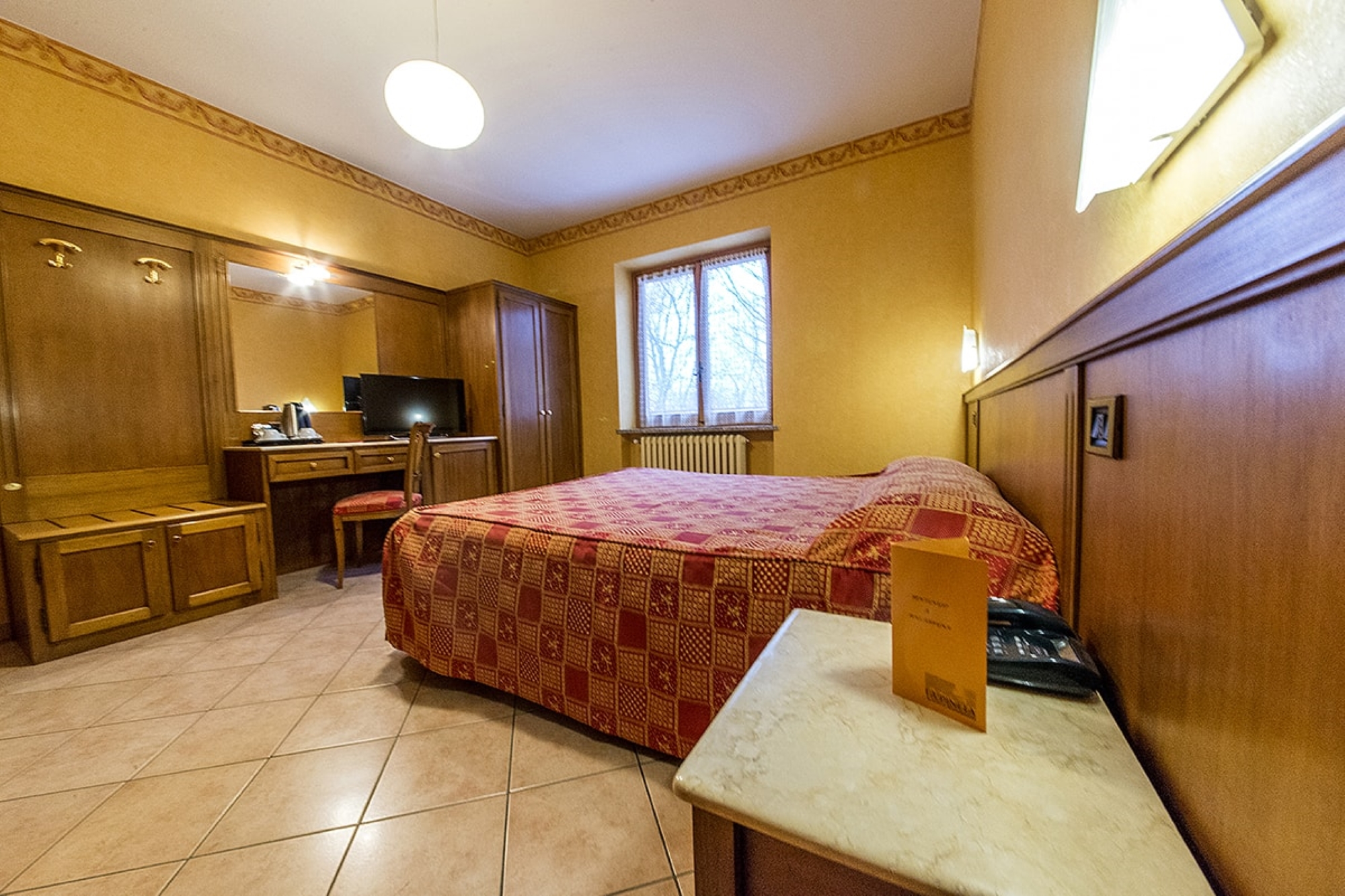
La pineta
- (Roccabruna)
- +39 3663665262
- info@lapinetaalbergo.it
- https://www.lapinetaalbergo.it/
- CIN: ITOO4ISTAlI6WHBCGE
- Opening period: All year round