English
 Italian
 German
 French
Marmora hamlets trail
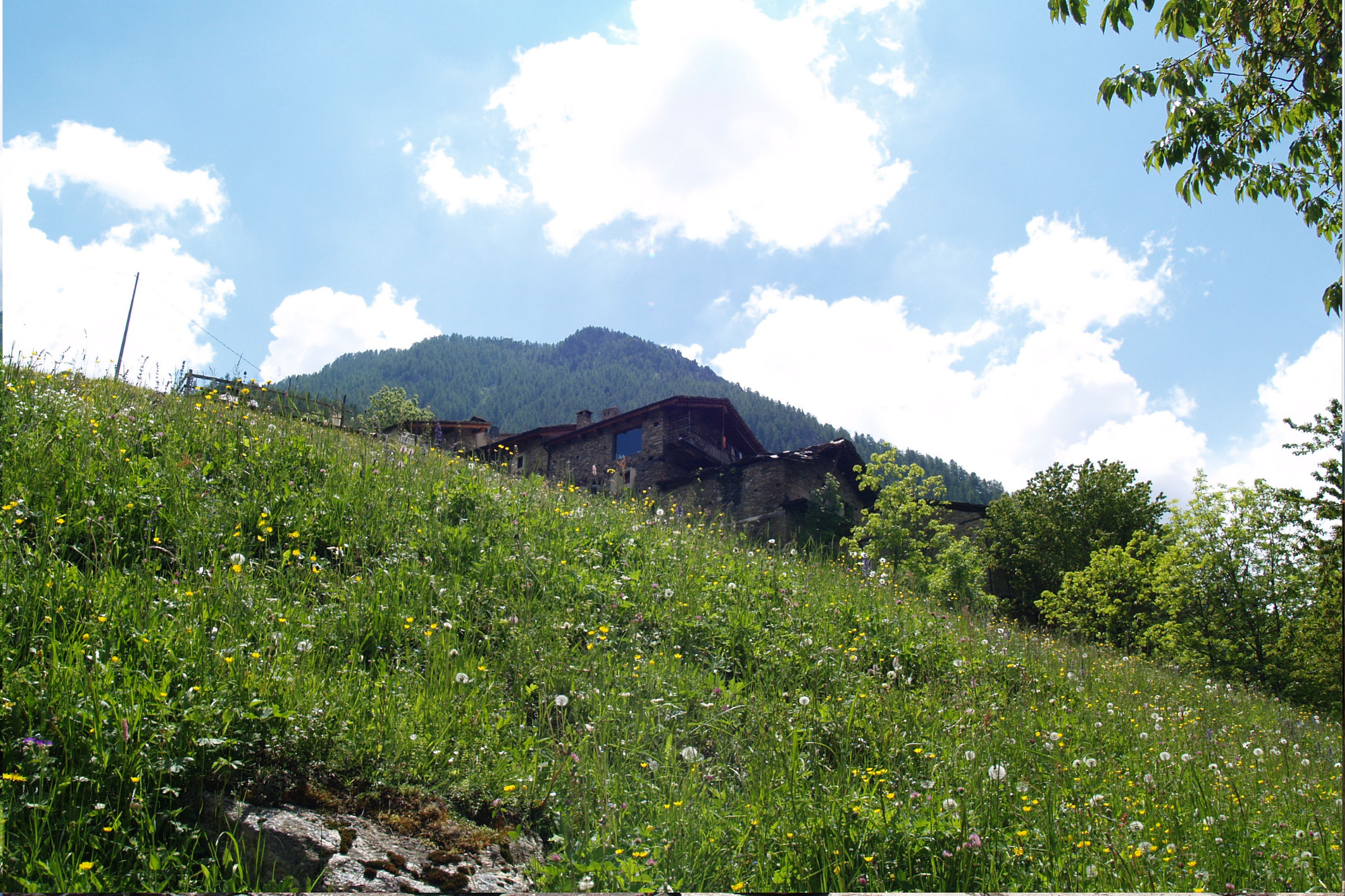
The hamlets of Marmora follow one another at short distances along a sunny slope of the valley, nestled among meadows, pastures, and larch forests. This itinerary leads to the discovery of a surprisingly rich historical and artistic heritage.
From the parking lot of the multipurpose hall, a short climb leads to the hamlet of Vernetti, home to the town hall and the ethnographic museum “La vito d’en bot”. This was once the site of the famous “Fiero di Debit” in September, an important event for a community tied to livestock farming and pastoralism.
Continue toward the Sanctuary of the Madonna del Biamondo, built in 1719 around a votive pillar from 1553 depicting a Madonna and Child. The painting is still preserved inside the sanctuary today.
Passing the hamlet of Finello, you reach the Chapel of San Sebastiano, which houses precious fifteenth-century frescoes by Giovanni Baleison from Demonte. Opposite the chapel stand the remains of the ancient mill-sawmill, decorated by Giors Boneto from Paesana. The path continues toward the hamlet of Arata, then reaches the hamlet of Garino, where a house preserves an original stone-carved mullioned window, and then Torello, a hamlet that holds interesting examples of traditional Alpine architecture and several works by Giors Boneto. Not far away is Tolosano, the last hamlet on the road to Colle di Esischie, where the Chapel of San Giorgio and Sant’Anna stands out, featuring a painting attributed to Giors Boneto and where traces of the community life of the past are still visible.
From here, the path unfolds through the hamlets of Urzio and Arvaglia, before climbing back up toward the hamlet of Sagna Rotonda, where the restoration of the buildings has managed to preserve the identity of traditional Alpine architecture; here too, there is a fresco by Giors Boneto. You then reach the Grange Bersezio, a testament to the ancient agricultural and pastoral organization of the valley.
The path then descends toward the hamlet of Parrocchia, the religious center of the municipality. The Parish Church of San Massimo houses important works of art and bears witness to the long religious history of the municipality. A little further down, you reach Reinero, the largest and perhaps once the most prosperous hamlet. In 1936, sixty-nine people lived there, and it was home to essential trades for the community, from the tailor to the shoemaker, from the cooper to the baker. The numerous houses still preserve monumental portals and stone openings that testify to the wealth of the past. Among the most significant buildings, the communal oven dated 1557 stands out, while a fresco attributed to Gauteri is also visible in the hamlet.
The itinerary continues through flower-filled meadows toward the hamlet of Superiore and then reaches Sodà, a small and precious example of an Alpine settlement that has remained almost intact. Continue to the hamlet of Serre, where an ancient oven still overlooks the road.
Finally, you arrive at Brieis, one of the most characteristic hamlets on the route. Here, the charming oven built against the rock above the fountain and the Chapel of the Most Holy Trinity deserve attention. Among the stone houses, a tower slightly higher than the surrounding buildings also emerges, known in local tradition as the “casa dl’avoucat.”
From Brieis, a pleasant path leads back to Vernetti, closing the loop and leading back to the starting point after a journey through some of the most fascinating historical hamlets of the Maira Valley.
Shorter variant
Starting from Borgata Vernetti, follow a paved road until you reach the Sanctuary of the Madonna del Biamondo, built around a votive pillar featuring a Madonna and Child. Continue on to come across the Chapel of San Sebastiano, which houses frescoes by Giovanni Baleison from Demonte. Opposite the chapel are the remains of a mill-sawmill, decorated by Giors Boneto from Paesana. Walking through the meadows, you arrive at Tolosano, where the Chapel of San Giorgio and Sant’Anna stands, with a painting on its façade by Giors Boneto. Taking a mule track, you reach Urzio, a completely uninhabited hamlet that features a manor house, and shortly after, Arvaglia, a very small hamlet. Upon arriving in Reinero, you can admire a wealth of medieval art and a fresco by Gauteri. After crossing the hamlet, you reach the Church of San Massimo, which contains frescoes by Tommaso Biazaci from Busca. You then descend through the meadows to the upper hamlet, Soda, and Serre. Upon arriving in Brieis, take a path that leads back to the Vernetti town hall.
Information
- Ascent: 660 m
- Distance: 12.2 km
- Region: Marmora
- Seasons: Autumn, Spring, Summer
- Difficulty: Easy
Mountain sports are potentially dangerous activities and must be undertaken with the right equipment and preparation. We invite you to consult the weather and avalanche bulletin before embarking on an excursion and/or contact a guide for assistance. The Valle Maira Tourist Consortium declines any responsibility in relation to the advice and itineraries shown here, which must be evaluated personally according to the weather conditions and snow cover.