 English
 Italian
 German
 French

Accessibility Project
Valle Maira continues to expand its horizons and focuses on accessibility as a goal and strength. The first step is to enable access to its natural, historical, architectural, and cultural heritage in an increasingly broad and varied way for all categories of people.
The first project we are implementing in this direction is specifically aimed at people with visual disabilities, particularly those with low vision and the blind. A project that begins with the actions we will discuss below but which – in a long-term perspective – will tend to expand progressively and further, involving the Valle Maira territory and the municipalities that make it up.
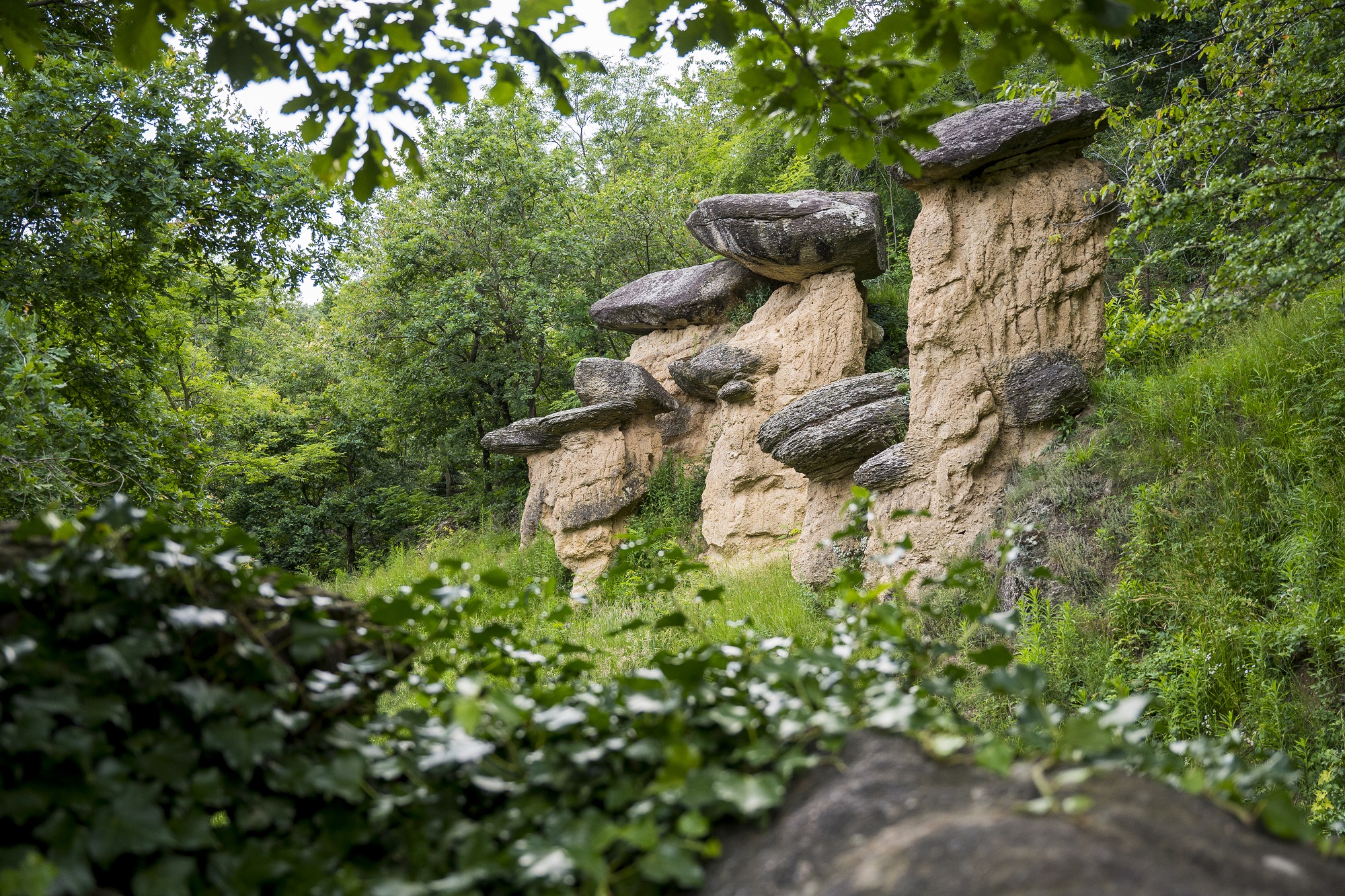
Therefore, the “first stage” of the new inclusive accessibility approach that Valle Maira is following starts from Villar San Costanzo, and more precisely from the Ciciu del Villar Nature Reserve. Here, in this context of geological and naturalistic value, the project actions aim to make the reserve area accessible and usable for the visually impaired, as well as for people with mobility disabilities, thus creating a complementarity of project actions aimed at accessible use.
In detail, the accessibility project for the Ciciu del Villar Nature Reserve in the Municipality of Villar San Costanzo includes installations of 3 panels with tactile images (printed images with raised illustrations that realistically reproduce the edges of the figures so as to allow blind and low-vision people to form a mental image, enabling the association between tactile representation and corresponding object) and codes with NFC technology (Near Field Communication, a technology capable of connecting two devices located at a short distance from each other in wireless mode) allowing users with visual disabilities to access multimedia content such as audio presentations that will provide insights into natural, historical, architectural, and cultural heritage.
The 3 installations are dedicated respectively to:
- 1) the geological formation of the so-called “stone mushrooms”; in detail, it will be placed near the first ciciu formation encountered once inside the Reserve (the formation called “the family”)
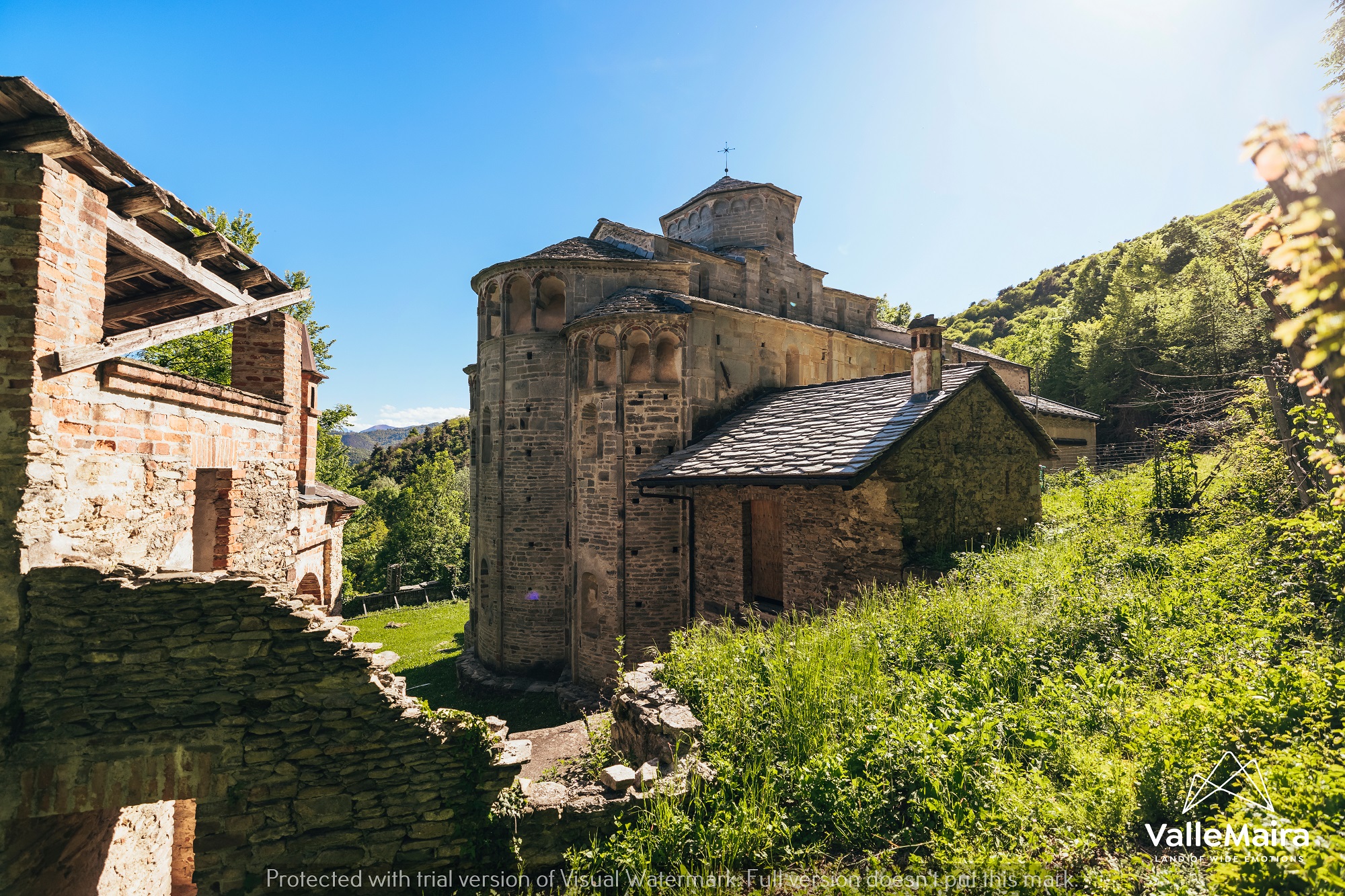
- 2) the church/sanctuary of San Costanzo al Monte, one of the most interesting Romanesque monuments, and at the same time one of the least known in the Region
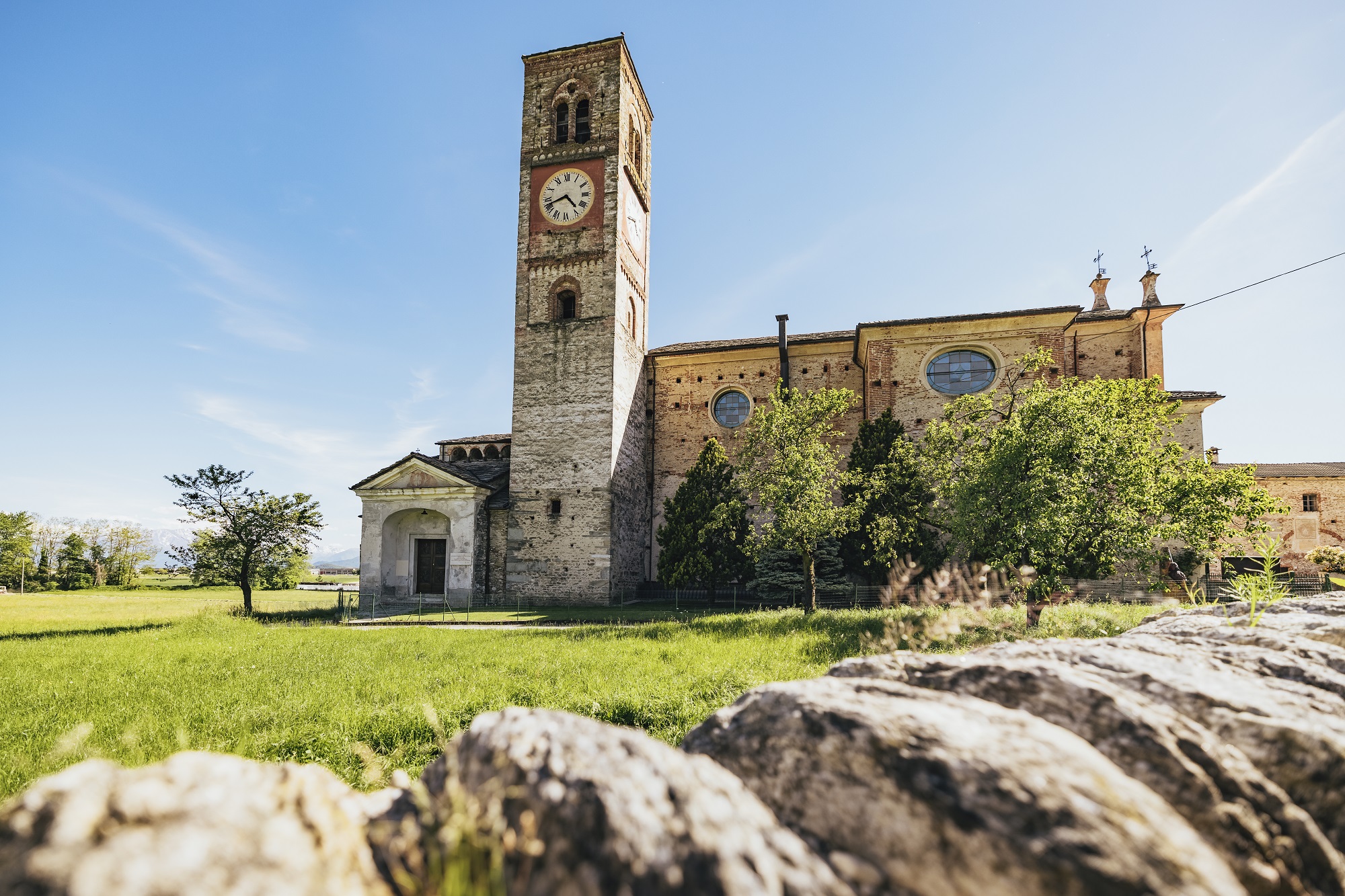
- 3) the Former Abbey of San Pietro in Vincoli, an ancient Benedictine abbey now a church, with the 11th-century Benedictine crypt and the funerary chapel dedicated to Abbot Giorgio Costanzia di Costigliole built in 1450.
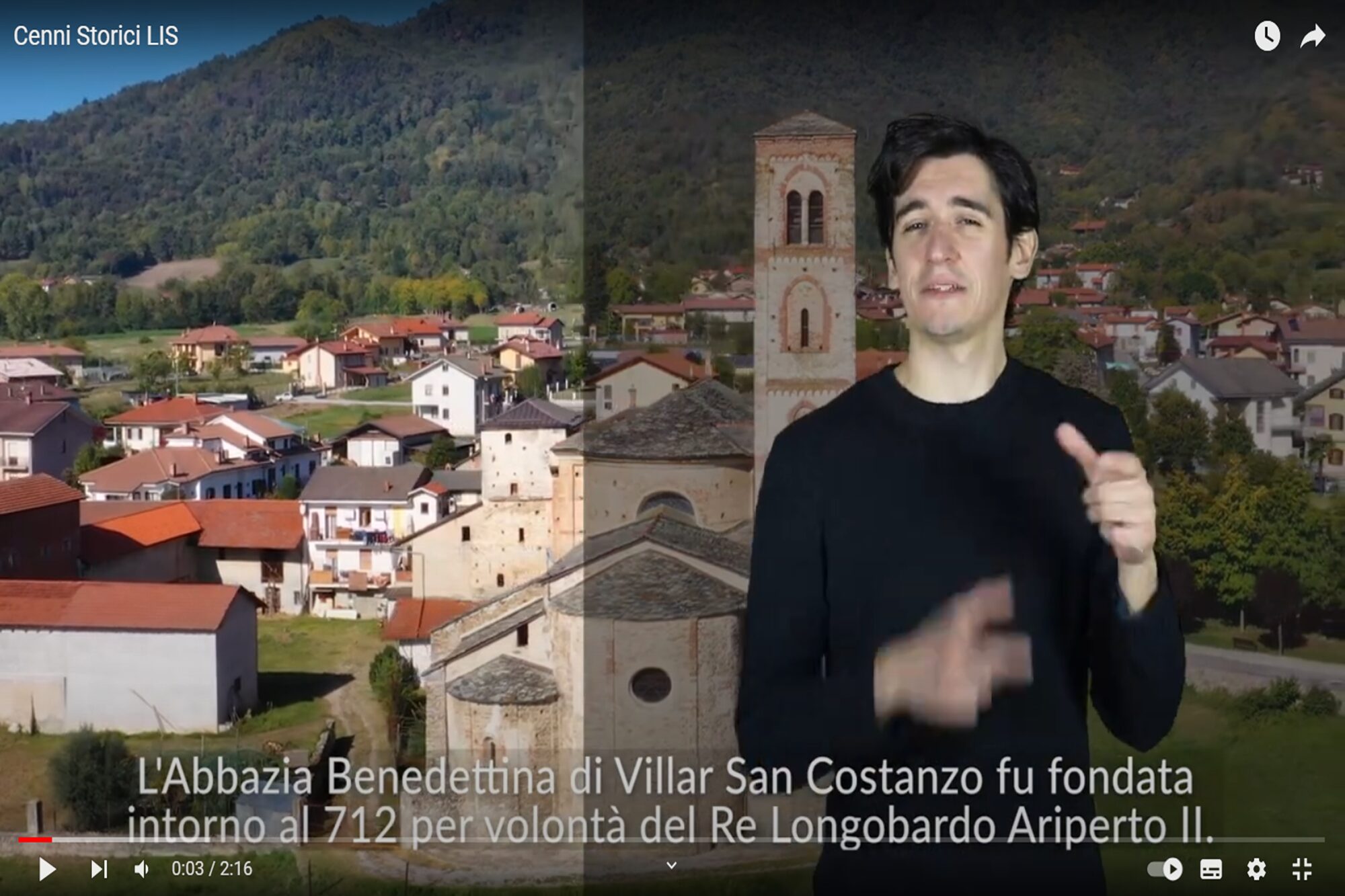
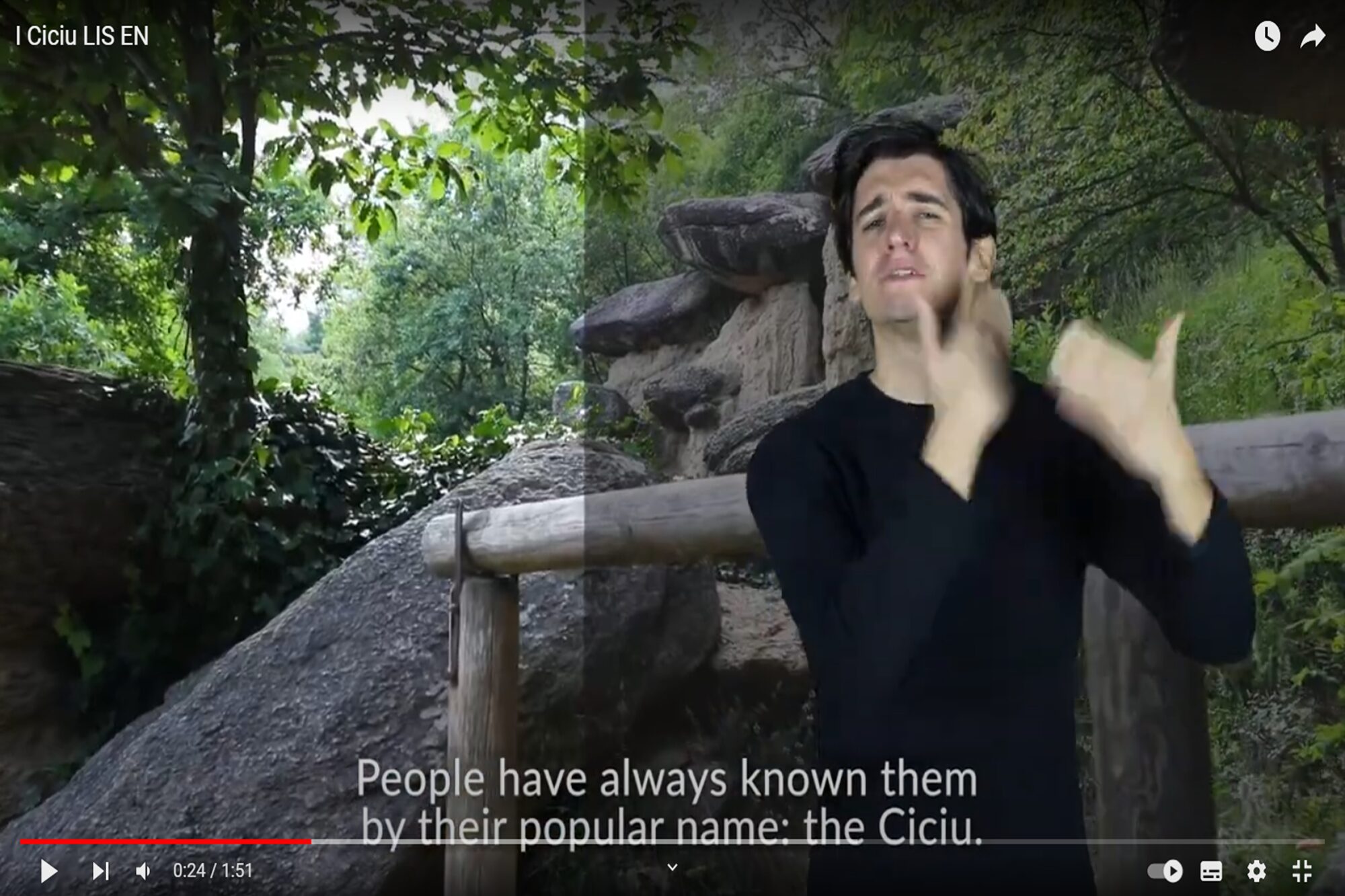
On these 3 installations, the “second stage” has been integrated, the second part of the project – aimed at improving and increasing accessibility for users with hearing and visual disabilities – through the creation of videos dedicated to the 3 attractions mentioned above with audio track and subtitles in both Italian and English, integrated with audio/video support presentations in LIS (Italian Sign Language) and IS (International Sign), made accessible on the same tactile panels with QR codes that link to the Museo Diffuso Cuneese YouTube page, which kindly provided the original videos. The integrations of audio/video guides in LIS and IS were created with the fundamental contribution of the National Association for the Deaf – Cuneo Provincial Section and the production company Vdea Produzioni.